When Penthouse arrived in the United States in 1969, the nation was standing on a fault line between repression and revolution. The 1960s had already cracked open the old moral order—the pill, rock and roll, civil rights, and women’s liberation had changed the tone of public life—but sex, especially visualized sex, was still a frontier carefully guarded by censorship. American media treated nudity as either scandal or sin. Penthouse, a glossy, artfully lit import from Britain, entered that world like a shockwave. It didn’t simply sell erotic photographs—it rewired America’s understanding of what was acceptable, even beautiful, to look at.
Bob Guccione, the magazine’s founder, was not a journalist in the traditional sense; he was a painter by training, a romantic by temperament, and a provocateur by instinct. His vision of sexuality was deeply European—eroticism as art, not offense. In the United Kingdom, Penthouse had already stirred conversation for its lush photography and refusal to apologize for desire. But in the United States, where moral conservatism still shaped much of the media landscape, Guccione’s entry marked something more radical. He wasn’t just showing nude women; he was normalizing the gaze itself.

Breaking the American Lens
Before Penthouse, nudity in American magazines was coded and contained. Playboy had made its mark in the 1950s by offering tasteful, soft-focus images that hinted at sexuality but rarely lingered on it. Hugh Hefner’s women were fantasy companions for the modern man—sophisticated, approachable, and framed by a lifestyle of jazz and martinis. Their nakedness was symbolic of liberation, but it remained carefully choreographed to preserve innocence.
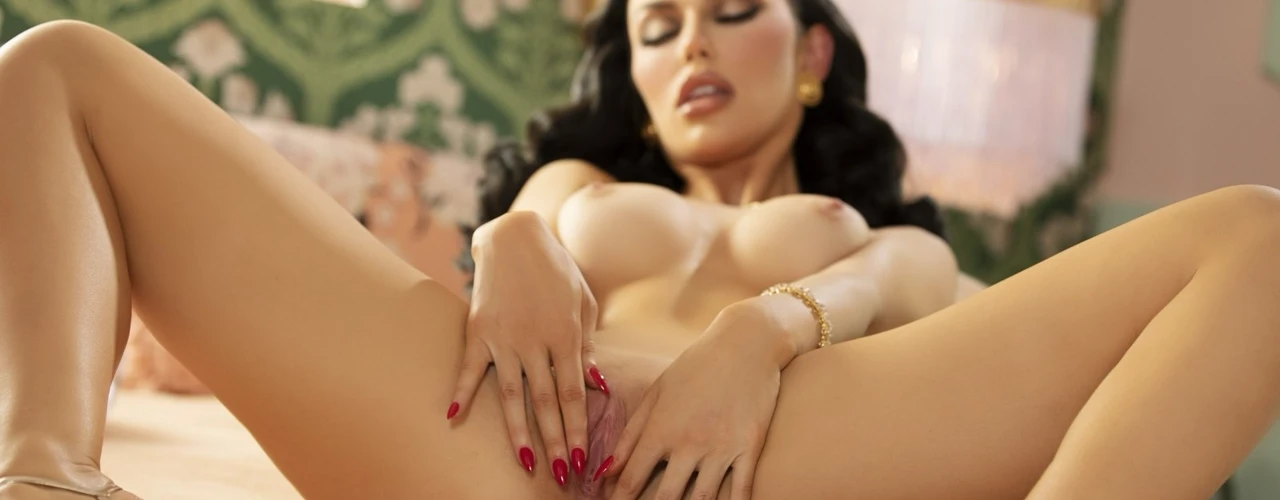
Penthouse disrupted that balance. Guccione’s approach was painterly and unapologetic. He used richer colors, more dramatic lighting, and more intimate framing. His models—Penthouse Pets—looked directly into the camera, their gazes assertive rather than coy. This small but revolutionary difference shifted the power dynamic. The Playboy Playmate invited the viewer to dream; the Penthouse Pet invited him to confront.
By the early 1970s, this stylistic rebellion had turned into a cultural one. Penthouse introduced a level of explicitness that was unprecedented in mainstream publishing. It revealed not only bodies but emotions—lust, confidence, pleasure, even melancholy. What had once been taboo became subject matter for art, discussion, and commerce. Suddenly, magazines on newsstands were no longer pretending that sexuality didn’t exist; they were competing to define it.
The Sexual Revolution’s Mirror
Guccione didn’t create the sexual revolution, but he gave it a face—and a glossy cover. America was ready for him. The counterculture had already begun to erode the taboos around birth control, premarital sex, and female desire. What was missing was imagery that matched that freedom. Penthouse filled that void.
In the early issues, Guccione often paired erotic spreads with political essays and cultural commentary. This juxtaposition was deliberate. He wanted readers to see that sex was not separate from politics, art, or intellect—it was part of the same human experience. The magazine ran investigative reports on government corruption, the Vietnam War, and corporate scandals alongside its pictorials. This combination of high journalism and high eroticism made Penthouse feel subversive, even revolutionary.
Where American media had long treated sexuality as something to be whispered about, Penthouse made it conversational. It framed nudity as a fact of life, not a moral problem. Its success showed that audiences were ready to look at the human body without shame—and that advertisers, readers, and even critics could accept it as legitimate media. By the mid-1970s, Penthouse was selling millions of copies each month, rivaling and at times surpassing Playboy.
The Aesthetic of Honesty
If Playboy’s imagery was about idealization, Penthouse’s was about truth. Its photographs were not always “pretty” in the traditional sense—they were bold, shadowed, and emotional. Guccione believed that eroticism was not simply the celebration of beauty but the exposure of vulnerability. He often said he photographed women as he painted them: not to flatter, but to reveal.
This approach resonated deeply in a culture beginning to wrestle with questions of authenticity. The 1970s were a decade of peeling back masks—political scandals, feminist manifestos, and the first waves of sexual self-help literature all aimed to strip hypocrisy from public life. In that climate, Penthouse felt like truth-telling. It refused to hide the physical reality of desire, and in doing so, it made the conversation around sex more honest.
For many readers, especially women, this honesty was complicated but liberating. Feminist critics were divided: some condemned Penthouse as exploitative, others defended it as a rare acknowledgment that female sexuality could be bold, autonomous, and complex. Regardless of where one stood, the magazine’s presence made it impossible to maintain the pretense that America was still a prudish nation.
The Cultural Normalization of Nudity
What Penthouse accomplished, perhaps more than any other publication, was the normalization of the nude image. It wasn’t the first to show skin, but it was the first to do so without apology, and with an aesthetic intensity that elevated eroticism into art. Within a few years of its arrival, other magazines, music videos, and even mainstream films began adopting similar visual languages—softer lighting, daring poses, open gazes.
Hollywood noticed. The erotic thrillers of the 1980s and early 1990s—films like 9½ Weeks or Basic Instinct—owed much to the Penthouse aesthetic. Fashion photography followed suit: publications like Vogue and Harper’s Bazaar began featuring nude or semi-nude portraits that blurred the line between couture and eroticism. Even advertising, once the most conservative sector of media, began to use sensual imagery to sell perfume, jeans, and luxury goods.
What had once been scandalous was now chic. The shock of Penthouse’s early years gradually faded into acceptance. Guccione had succeeded in transforming the cultural grammar of nudity—from something that demanded secrecy to something that expressed sophistication and self-expression.
The Intellectualization of Desire
One of Guccione’s most lasting contributions was his insistence that eroticism and intellect were not opposites. He rejected the idea that publishing nude photographs disqualified a magazine from serious cultural commentary. His editorials spoke of freedom, hypocrisy, and the hypocrisy of censorship laws. He saw Penthouse as a statement against puritanism, a defense of art’s right to explore every aspect of the human condition.
This vision anticipated a broader shift that would unfold in the decades to come: the understanding of sexuality as a legitimate subject for academic, artistic, and political discourse. By the 1980s and 1990s, universities were teaching courses on gender and erotic representation. Museums were exhibiting works that explored the body as both aesthetic and social text. The visual language that Penthouse had mainstreamed became the foundation for an entirely new cultural vocabulary.
The Legacy: From Scandal to Acceptance
By the time the new millennium arrived, Penthouse’s radicalism no longer looked radical. The internet had democratized access to erotic content, and the boundaries between pornography and pop culture had blurred. But the normalization of nudity—the comfort with seeing the body, the acceptance of desire as ordinary—was the world Penthouse had imagined decades earlier.
Its influence lingered even as its sales waned. The confidence of modern erotic photography, the sensual honesty of contemporary art, the casual way advertising treats skin as texture rather than temptation—all trace back to the revolution Guccione began.
Penthouse did not merely make nudity visible. It made it legitimate. It changed the moral geography of American culture by insisting that the human body, far from being obscene, was the most natural subject of all.
Today, when images once considered unprintable appear on billboards or in gallery retrospectives, it’s easy to forget how much courage it took to get there. In its prime, Penthouse was more than a magazine—it was a manifesto wrapped in satin and shadows. It dared a prudish nation to look at itself honestly, and in doing so, it made the gaze itself an act of liberation.
The taboos it shattered have not entirely disappeared, but thanks to Penthouse, they no longer define the culture. Desire became dialogue. The naked body became art. And what was once whispered became, at last, simply human.
Comments